
Devdiscourse
Devdiscourse
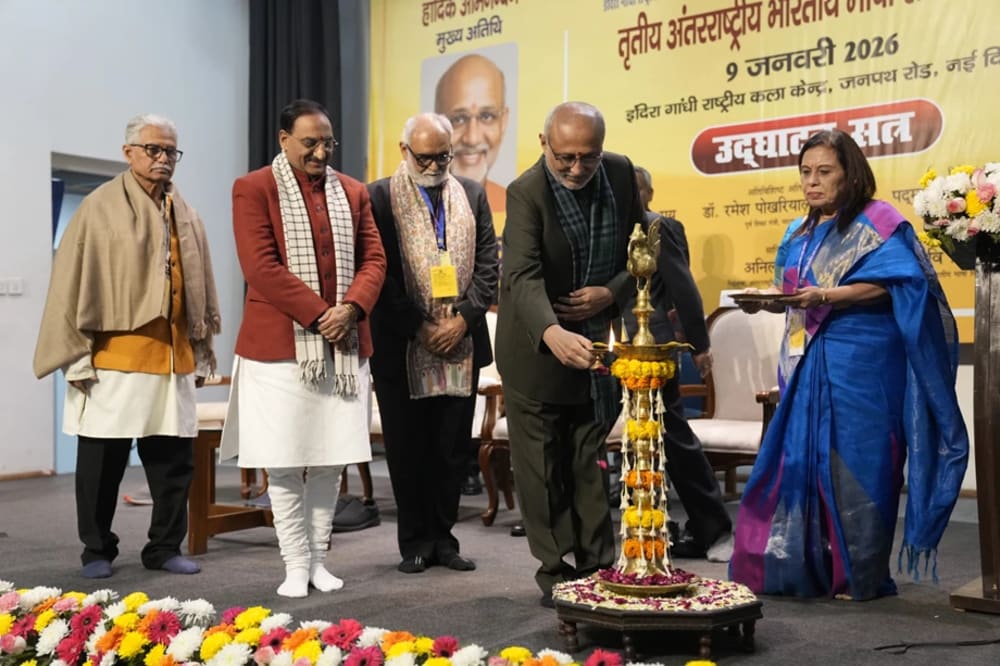
Vice-President Shri C.P. Radhakrishnan inaugurated the Third International Conference on Indian Languages, reframing linguistic diversity not as a historical relic but as a contemporary strategic asset. Drawing connections from ancient palm-leaf manuscripts to modern digital platforms, he positioned language as the carrier of civilisational memory and knowledge systems.
A key theme was the relationship between linguistic plurality and democratic strength. Radhakrishnan noted that India's Constitution, particularly the Eighth Schedule, affirms that national unity thrives through mutual respect rather than uniformity. He cited recent milestones, including the Santhali translation of the Constitution, as evidence of growing democratic recognition for all speech communities.
The Vice-President outlined how technology must serve language preservation through digital archives, AI-powered translation systems, and multilingual platforms. He referenced government initiatives including the National Education Policy 2020 and the Gyan Bharatam Mission as frameworks for this work.
The conference brought together scholars, technologists, and international delegates to address the urgent challenge of endangered languages in an age of digital governance and artificial intelligence, positioning India's rich linguistic ecosystem as essential infrastructure for inclusive innovation.

PM Modi's Thirukkural Gift Puts Tamil on World Stage

Konkani Language Champion N. Purushothama Mallya Dies at 97

arXivLabs Framework Description Contains No Language Focus

Bodhan AI Launches Four Indic Models for OCR, Speech and Translation

Centre Opposes English as Native Language in CBSE Row

Bangladesh Seeks Bengali-Language AI Models for Classrooms